
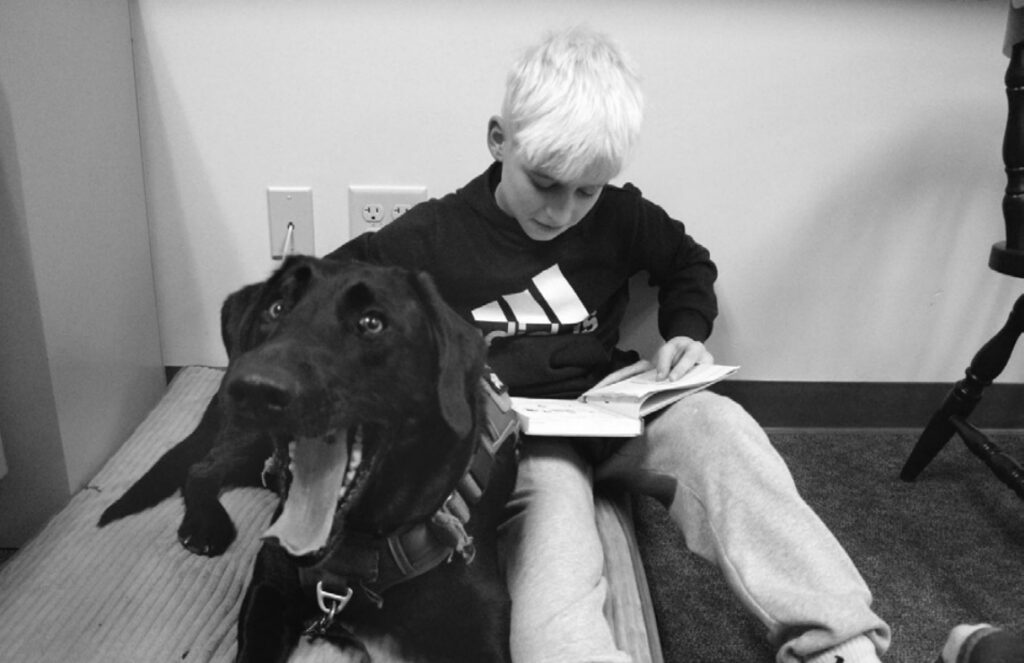
Bain Wiegel feels calm and centered when he gets time to work on reading and math with Maverick. No, not Mr. Maverick.
Just Maverick – one of Pecatonica Area School District’s school companion dogs.
“I like him being here. He helps me feel calm and relaxed,” shared Wiegel, a middle school student. “I feel more confident than usual. There is something about a dog in the classroom.”
Maverick, a 5-year-old black Labrador and Nyahbean, an 8-year-old Irish Doodle, are in the district two days a week to provide meaningful yet subtle opportunities for students to create connections, release anxiety, and feel more centered while learning, completing assignments or simply walking through school.
“It’s almost like the dog is able to absorb that anxiety or that stress – or whatever the student is dealing with in the moment,” said Dr. Dani Scott, Pecatonica’s superintendent. “They can turn it over to the dog, and the dog gladly accepts it. It provides a smoothing, you’re-going-be-OK kind of feeling. It happens so naturally.”
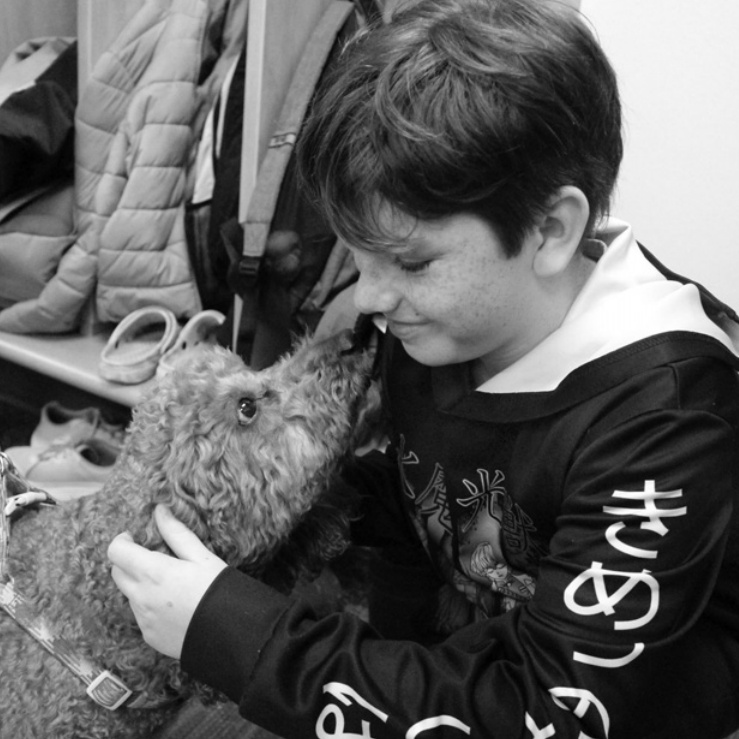
Nyah and Maverick have assumed their roles, in part, because of the passion and influence of the late Johanna Chenous, the district’s director of special education and school psychologist who died in fall 2024 after a battle with cancer. Chenous supported and encouraged Nyah’s human, elementary special education teacher Gayle Gronski, and Maverick’s owner, middle school special education teacher Sara Hendrickson, to acquire the resources and training necessary to offer the service at Pecatonica.
“Johanna’s unspoken goal each day was to simply to make sure that every student she encountered knew that they were cared for and an essential part of our community,” said Pec Elementary Principal Chris Rogers. “In a way, Johanna’s warmth lives on through our therapy dog program as Nyah and Maverick also bring a wonderful sense of belonging and laughter on a regular basis for our students and staff.”
Much More than Class Pets
The presence of school companion dogs – sometimes also referred to as school therapy dogs – offers much more than that of class pets. Class pets, while an important classroom addition, do not offer the level of emotional connection and opportunities for managing anxiety and significant emotions. Class pets help teach skills like caring for and feeding animals, while companion dogs, like Nyah and Maverick, allow for interactions that improve moods, manage anxiety, and lower stress, among other proven benefits.
“There is something in (the dogs’) temperament that allows them to absorb all of these negative emotions,” Scott said. “They’re able to take that off the students’ shoulders and on to them – just by being in the same room.”
That, in part, comes from training and certification. Maverick has been through several obedience classes and began coming to school two days a week last fall after becoming certified as an Advanced Canine Good Citizen through the American Kennel Club. Nyah has been working in the district with Gronski since 2018, starting out at Camp Pec, after Chenous encouraged her to fulfill her dream to work with a dog in a school setting. Nyah, too, has her Canine Good Citizen Certification, which is required for being in a school.
“Nyah can be the nonjudgmental friend and companion the student can work with to build stamina for the workload, attention span, and support higher classroom engagement,” Gronski shared. “Her calm presence eases anxiety, improves focus and creates a more compassionate learning environment without saying one word.”
Maverick stays with Hendrickson throughout the day at the middle school and, because she supports students in many classrooms, he gets to be in those rooms visiting and saying hi to all the students and teachers. While in the middle school resource room, he is able to roam and has his own space with a bed and chew toys.
“There are some students who walk right past him every day, and there are students who seek him out. He really changes the energy of the hall on the days he is here,” Hendrickson said. “He is in tune to finding the students who need his attention, seeking them out for cuddles and pets. He can put a smile on so many faces, even when they least expect it.”
For middle schooler Loni De Voe, Maverick’s presence is welcome, lowering her stress and helping increase a sense of calm.
“He’s always happy and excited to see us,” De Voe said.
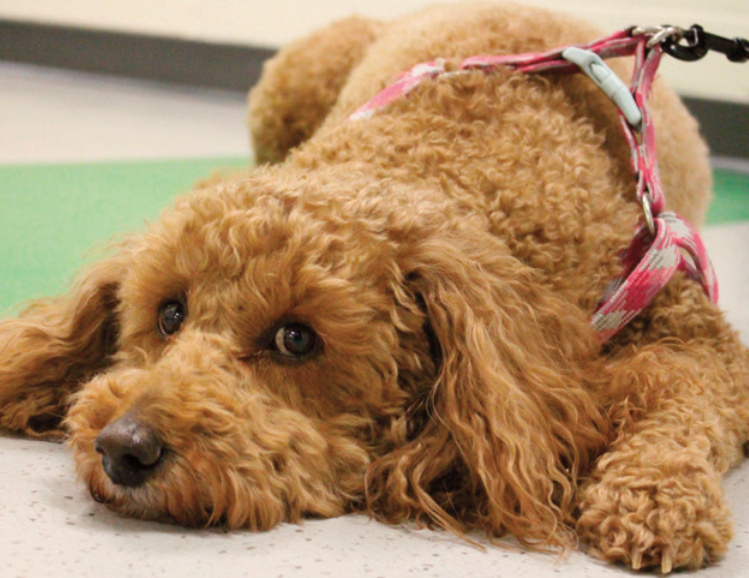
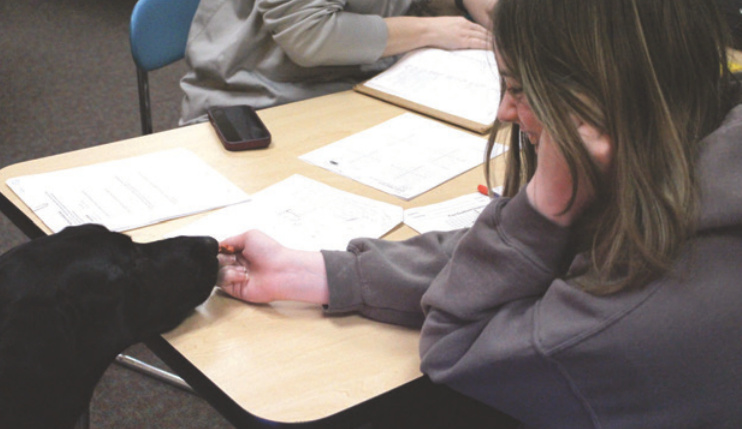
Nyah and Maverick also walk the halls while on leashes with Gronski and Hendrickson, allowing passing students and staff to greet, pet, and interact with them. These outings at Pec Elementary and the middle/high school allow more students and staff members to enjoy their presence, even allowing for some treat distribution.
In fact, Scott is one of several staff members who has a drawer ready with treats just for Maverick.
“We look forward to his visit in the district office, for sure,” she said.
Research Says
The benefits from school companion dogs are not just rooted in feelings – it is proven through research. In fact, a 2023 study found animal-assisted education positively impacts the social and emotional outcomes of elementary school students, including self-confidence, work attitude, relationships with teachers and relationships with other students. Specifically, students’ selfconfidence improved in terms of their ability to complete tasks, along with a notable improvement in their self-image.
“The connection between school animal-assisted activities and mental health has been well documented. Studies show there is reduced depression and anxiety levels among students who regularly interact with these animals,” Gronski said. “Regular exposure to animal-assisted activities can help students better manage their emotions.”
Wiegel senses this is the case – in fact, he believes it helps all his classmates focus, learn and support each other.
“It helps me work,” he said after
reading a few pages of a book while sharing space on Maverick’s dog bed. “It’s good for everybody.”
A Paws-itive Legacy
For Gronski and Hendrickson, sharing about Nyah and Maverick goes hand in hand with sharing about the legacy Chenous leaves behind at Pecatonica and her career in education. Chenous’ support and encouragement pushed both teachers to fulfill their desire to bring animalassisted education opportunities to the district, a fact that brings up both emotion and gratitude.
“Johanna always had a way to think through things – she always had the right things to say and the right way to say it,” Hendrickson said.
Chenous, a Wisconsin School Psychologist of the Year award recipient, was a well-respected leader whose impact continues to be felt throughout Pecatonica hallways.
“She was a quiet leader in the best way,” Scott shared. “She did so many things behind the scenes that you never knew about – they made not only the lives of our kids better but also but the lives of our staff better.”